
Video Game Scoring: Writing Music for Places, Not Scenes
Video game scoring is often discussed in terms of action sequences, dramatic cutscenes and major narrative moments. Yet some of the most interesting challenges in game music have nothing to do with scenes at all.
One of the biggest differences between writing music for film and composing music for video games is that players inhabit places. A film scene might last a few minutes before the story moves on. In games, players can spend hours exploring a world, retracing their steps, or simply absorbing the atmosphere of a location.
That changes the role of game music considerably.
Over the last decade, I've had the opportunity to compose music for narrative games, interactive experiences and emotionally driven projects. Much of the thinking in this article emerged while scoring Arctic Awakening, GoldFire Studios' narrative adventure set in the Arctic wilderness. Arctic Awakening ⇲ Portfolio ⇲
Players don't simply observe a world. They spend time inside it. They wander, explore, get distracted, and sometimes choose to linger in places that were never intended to be the centre of attention. A location that might take thirty seconds to pass through for one player could become somewhere another player spends twenty minutes simply absorbing.
As a composer, I've found myself thinking less about individual scenes and more about the emotional identity of locations. Rather than asking, "What is happening here?" I often find myself asking, "What does this place feel like?"
It's a subtle distinction, but an important one.
This way of thinking extends beyond traditional video games. While composing the soundtrack for OSHN, I approached the app's underwater world as a place with its own emotional identity. Rather than scoring individual events, the music evolves alongside the player's progress, using dynamic musical layers to reinforce a sense of growth, discovery and wellbeing throughout the experience.
Writing Music for Places, Not Scenes
When writing for a dramatic scene, the music often responds to a specific moment. Perhaps a character reveals something important. Perhaps tension is building. Perhaps the player has reached a critical point in the story. The music helps shape the emotional interpretation of that event.
When writing for a place, however, the challenge is different.
The music may need to support a player's experience for an unknown amount of time. It has to coexist with exploration, observation and player agency. It cannot constantly demand attention. In many cases, it needs to feel as though it belongs to the environment itself.
While working on Arctic Awakening, I found myself returning to this idea repeatedly.
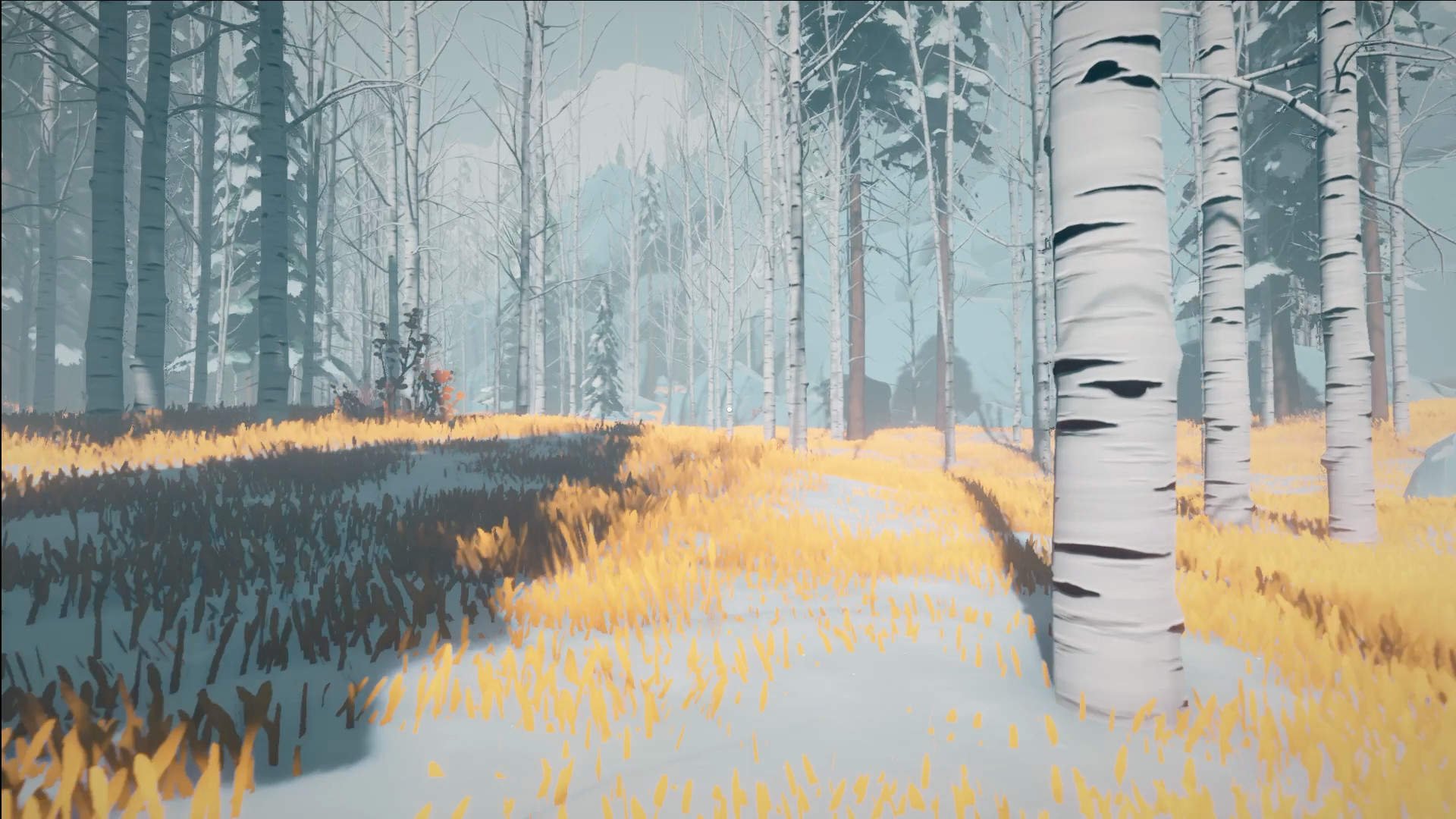
One area in particular stands out in my memory: a quiet birch forest where pale white trunks rise through yellow grasses, with distant rock formations visible beyond the trees. There is no major story beat attached to the location. No dramatic cutscene. No urgent objective.
The player is simply free to spend time there.
In fact, the music associated with the area only emerges if the player chooses to slow down and explore. That detail became important to me because it reflected the broader philosophy behind the score. The music wasn't trying to tell the player what to feel about a specific event. Instead, it was helping define the atmosphere of a place.
I think some of the most effective video game music works this way.
Often, players don't consciously separate the music from the environment. The two become intertwined. Years later, they may not remember a particular cue, chord progression or melodic phrase. What they remember is the feeling of standing somewhere.
A forest.
A city.
A frozen landscape.
A deserted building.
The music becomes part of the memory of that location.
Why Video Game Scoring Is Different
If you're interested in hearing more examples of music written for atmosphere, exploration and narrative experiences, you can listen to additional tracks from Arctic Awakening and other projects in my Portfolio ⇲.
This is one of the reasons I find video game music composition so fascinating.
In film, music is often attached to narrative progression. In games, it can become attached to geography. It can shape how a world is experienced and remembered.
Traditional video game scoring often focuses on supporting narrative moments, gameplay events and cinematic sequences. Those moments are important, and some of my favourite cues have been written for exactly those kinds of scenes.
But I've become increasingly interested in the quieter spaces between them.
The moments where players are simply existing within a world.
Walking through a landscape.
Listening to the wind.
Exploring an abandoned location.
Following a trail out of curiosity rather than necessity.
These are often the moments that reveal the unique strengths of games as a medium.
A player walking slowly through a landscape, accompanied by music that feels inseparable from that environment, is experiencing something fundamentally different from watching a scene unfold on a screen. The experience is personal. It unfolds at their pace. The player is not being shown a place. They are inhabiting it.
As a video game composer, I think that's something worth paying attention to.
We're not always writing music for scenes.
Sometimes we're helping shape the emotional identity of a world.
And when it works, the music stops feeling like an accompaniment. It becomes part of the place itself.
Years later, when players think back on a game, they often aren't remembering a specific cue or musical phrase. They're remembering how a place made them feel.
For me, that's one of the most rewarding aspects of composing for video games. The opportunity to help create worlds that players don't just see or hear, but genuinely inhabit and remember.
Every game world has its own emotional identity.
Whether the goal is tension, wonder, loneliness or discovery, I believe music can play a crucial role in shaping how players experience and remember those worlds.
If you're developing a narrative game or story-driven experience and would like to discuss music, I'd love to hear about your project. Get in touch ⇲.
Related Posts ↓


Video game music is often discussed in terms of action sequences, dramatic cutscenes and major narrative moments. Yet some of the most interesting challenges in game music have nothing to do with scenes at all.